
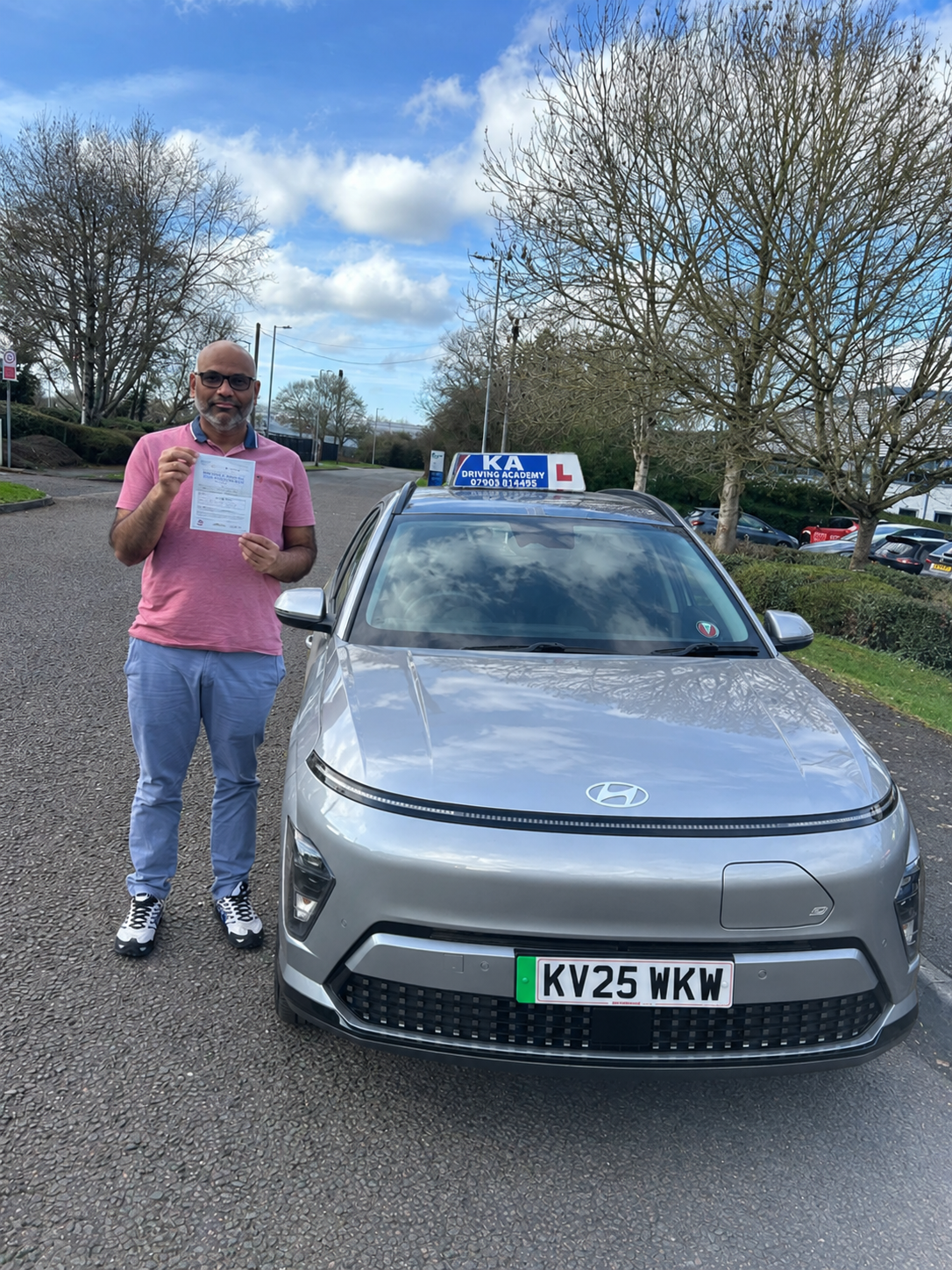
Preparing for your practical driving test is an important step towards becoming an independent driver. You may feel excited about the opportunity to earn your driving licence, but it is also normal to feel nervous as the test approaches.
The best way to prepare is to develop consistent driving skills, understand what the examiner expects and practise making safe decisions in different road situations.
At KA Driving Academy, we believe that good preparation involves more than memorising manoeuvres. It means developing the awareness, judgement and confidence needed to drive safely and responsibly.
Here are nine practical tips to help you prepare for your UK practical driving test.
1. Make Sure You Are Ready for the Test
Before booking your practical driving test, make sure you meet the applicable requirements and have developed the skills needed to drive independently.
Your instructor can help assess your readiness by observing your vehicle control, road positioning, observation, hazard awareness and decision-making.
You should aim to demonstrate safe driving consistently, including on unfamiliar roads and in changing traffic conditions.
Avoid rushing to take the test before you are ready. Building a strong foundation can help you feel more prepared on the day.
2. Practise Regularly
Regular practice allows you to reinforce what you have learned and become more familiar with different driving situations.
During your lessons, work on a variety of skills, including:
- Moving off and stopping safely.
- Approaching junctions and roundabouts.
- Changing lanes and turning.
- Maintaining appropriate speed and road position.
- Reversing and completing required manoeuvres.
- Responding to hazards and changing traffic conditions.
Ask your instructor to identify areas where you need further practice. Focused improvement is often more useful than repeatedly practising only the skills you already find easy.
Any practice outside professional lessons must comply with UK learner-driver rules, including licence, supervision and vehicle requirements.
3. Understand What the Examiner Assesses
The UK practical driving test assesses whether you can drive safely and independently while following the rules of the road.
You should be prepared to demonstrate appropriate observation, vehicle control, awareness of other road users and safe decision-making.
The test also includes an independent driving section and a manoeuvre. You may be asked to follow directions from a sat nav or traffic signs during independent driving.
Rather than trying to memorise a particular route, focus on understanding the principles of safe driving. The ability to respond correctly to unfamiliar situations is an important part of being a capable driver.
4. Improve Your Observation Skills
Observation is essential for safe driving and is an important part of practical test preparation.
Practise checking your mirrors when appropriate, observing junctions carefully and looking for potential hazards. Before changing direction or position, make sure you understand what is happening around your vehicle.
Pay particular attention to pedestrians, cyclists, motorcyclists and vehicles that may be difficult to see.
Remember that observations should be appropriate to the situation. The aim is to gather the information you need to make safe decisions without losing control of the vehicle.
5. Practise Manoeuvres Until You Feel Comfortable
Manoeuvres can feel challenging when you are preparing for your driving test, particularly if you are worried about making a mistake.
Ask your instructor to help you practise the relevant manoeuvres, such as reversing into a parking space or parallel parking, depending on the test requirements and your learning needs.
During practice, focus on:
- Checking your surroundings before moving.
- Maintaining suitable control of the vehicle.
- Observing pedestrians and other road users.
- Moving slowly enough to remain in control.
- Stopping and reassessing when necessary.
You do not need to rush. Safe observation and control are more important than completing a manoeuvre quickly.
6. Learn How to Drive Independently
Independent driving is designed to assess your ability to navigate while continuing to drive safely.
You may need to follow a sat-nav route or road signs. If you miss a direction or take a wrong turn, remain calm and continue driving safely.
A missed turn does not automatically mean that you have failed. What matters is how you respond and whether you continue to follow road rules.
Practise listening to directions, reading road signs and planning your position early enough to make safe decisions.
7. Manage Your Nerves Before the Test
Feeling nervous before a driving test is common. However, excessive worry can make it harder to concentrate and remember what you have practised.
To manage test-day nerves:
- Get enough sleep the night before.
- Allow plenty of time to arrive.
- Eat normally and stay hydrated.
- Avoid last-minute cramming or excessive practice.
- Take a few slow, comfortable breaths before starting.
- Listen carefully to the examiner’s instructions.
During the test, focus on the road and the task in front of you rather than worrying about the final result.
If you make a minor mistake, do not assume that you have failed. Continue driving safely and respond appropriately to the situation.
8. Prepare Your Documents and Arrangements
Before test day, confirm your appointment and check the latest official guidance for the documents and requirements that apply to your test.
For a UK car practical driving test, you will generally need your UK driving licence and must meet the relevant test eligibility requirements. Check the official GOV.UK guidance for the complete list of requirements.
If you are using a driving school’s car, confirm the arrangements with your instructor in advance. Make sure the vehicle meets the applicable test requirements and that you know where and when to meet.
Preparing these details beforehand can help prevent unnecessary stress on the day.
9. Learn from Every Lesson
Every driving lesson is an opportunity to improve. Instead of concentrating only on passing the test, think about the skills you need to become a safe and responsible driver for the long term.
After each lesson, review the feedback you receive and identify two or three areas to work on next time.
You may find it helpful to keep a simple record of your progress, noting which skills have improved and which still require attention.
With consistent practice, constructive feedback and a positive attitude, you can gradually build the skills needed for independent driving.
Common Mistakes to Avoid Before Your Driving Test
As you prepare, be careful not to develop habits that could affect your driving performance.
Some common issues include:
- Failing to check mirrors when appropriate.
- Approaching junctions too quickly.
- Choosing an unsuitable speed for the conditions.
- Incorrect road positioning.
- Not observing pedestrians and cyclists.
- Allowing nerves to affect decision-making.
- Focusing too much on avoiding mistakes rather than driving safely.
Discuss any recurring difficulties with your instructor and work on practical ways to improve.
Conclusion
Preparing for your practical driving test takes time, patience and consistent effort. By practising regularly, improving your observation skills, understanding manoeuvres and managing your nerves, you can develop the confidence needed to demonstrate your driving ability.
Remember that the goal is not simply to pass the test. It is to become a safe, responsible driver who can make good decisions on the road.
KA Driving Academy is here to support learners as they develop their driving skills and work towards their goals.
Ready to take the next step? Contact KA Driving Academy to discuss driving lessons and find out how structured practice can help you prepare for your practical driving test.