
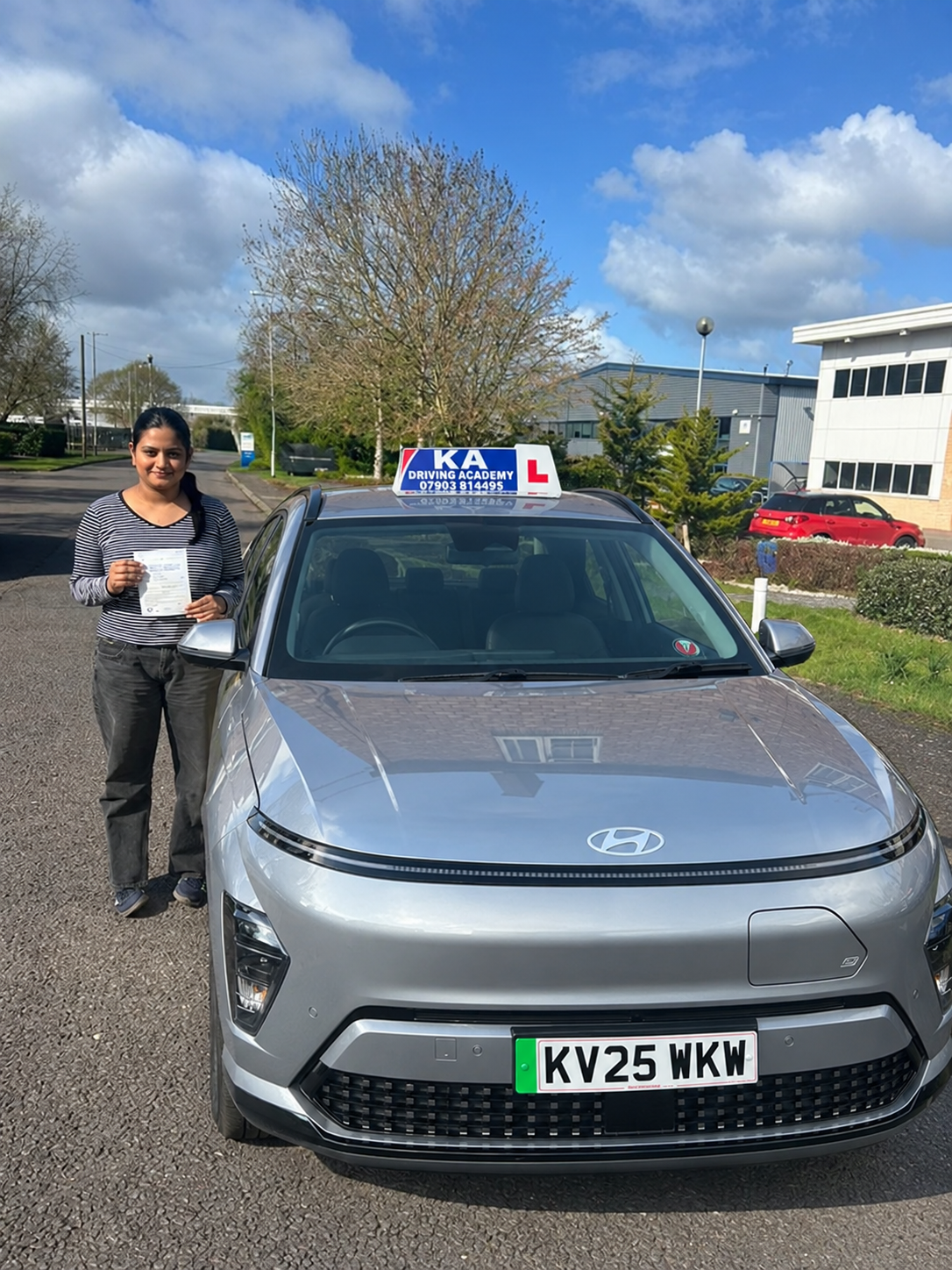
Road safety is one of the most important parts of learning to drive. Developing good driving habits early can help you become more aware of your surroundings, make better decisions and respond more safely to changing road conditions.
For learner drivers in the UK, driving means understanding road signs, following traffic rules, recognising hazards and sharing the road responsibly with other road users.
At KA Driving Academy, we believe that safe driving begins with knowledge, awareness and consistent practice. In this guide, we explore essential road safety tips that every learner driver should understand.
1. Always Check Your Mirrors
Your mirrors help you understand what is happening around your vehicle. Regular and appropriate mirror checks are essential when preparing to change speed, change direction or move away.
Before performing a manoeuvre, check the relevant mirrors and assess whether it is safe to proceed. Depending on the situation, you may also need to check your blind spots.
Avoid relying on mirrors alone when a direct observation is necessary. Other vehicles, cyclists or pedestrians may be in areas that are difficult to see.
Remember: Observation should support your decisions throughout the drive, not only when turning or parking.
2. Maintain a Safe Following Distance
Keeping enough distance between your vehicle and the one in front gives you more time to react if traffic slows or stops suddenly.
In dry conditions, the Highway Code advises drivers to allow at least a two-second gap from the vehicle ahead. This gap should be increased in wet weather and increased further in icy conditions.
Choose a fixed point on the roadside and check that you pass it at least two seconds after the vehicle in front. This can help you judge your following distance.
Avoid tailgating, even when traffic is moving slowly or another driver appears impatient.
3. Understand Road Signs and Markings
Road signs and markings provide essential information about speed limits, hazards, junctions, restrictions and the movement of traffic.
Learner drivers should take time to understand common signs and their meanings. Pay particular attention to signs that indicate changing speed limits, pedestrian crossings, roundabouts, roadworks and restricted areas.
When approaching an unfamiliar road layout, reduce your speed appropriately and observe the signs early enough to make safe decisions.
Understanding road signs also helps you prepare for driving lessons and your theory and practical driving tests.
4. Adjust Your Speed to the Conditions
Driving at a safe speed means considering more than the posted speed limit. Weather, visibility, traffic, road surface and the presence of vulnerable road users can all affect how quickly you should travel.
Rain can reduce tyre grip and increase stopping distances. Fog may limit visibility, while darkness can make pedestrians and hazards harder to see.
Always choose a speed that allows you to remain in control and stop safely within the distance you can see to be clear.
Remember that a speed limit is a maximum, not a target.
5. Develop Strong Hazard Awareness
Hazard awareness involves recognising potential dangers early and deciding how to respond.
Examples include:
- A pedestrian approaching a crossing.
- A cyclist travelling near parked vehicles.
- A car slowing down unexpectedly.
- Children playing near the road.
- A vehicle emerging from a side road.
- Poor visibility around a bend.
Look well ahead, scan your surroundings and think about what other road users might do next. Early awareness gives you more time to respond calmly and safely.
Practising hazard awareness with your instructor can help you understand how to anticipate situations rather than react at the last moment.
6. Use Indicators Correctly
Indicators help communicate your intentions to other road users. Use them when appropriate before turning, changing lanes or moving away from the kerb.
However, signalling does not give you priority. Before moving, check that the manoeuvre is safe and that you will not cause another road user to brake or change direction unexpectedly.
Signal clearly and in good time, taking the road layout and traffic conditions into account.
7. Stay Focused and Avoid Distractions
Driving requires continuous attention. Even a brief distraction can cause you to miss an important sign, overlook a hazard or react too late.
Keep your phone out of reach while driving and never handle it while driving. In the UK, using a hand-held mobile phone while driving is generally illegal, subject to limited legal exceptions.
Set your navigation, music and other controls before setting off whenever possible. If you need to deal with something that takes your attention away from driving, stop somewhere safe and legal first.
8. Practise Safe Manoeuvres
Parking, reversing, turning and moving away safely all require good observation and control.
During lessons, practise these manoeuvres at a suitable pace. Check the surroundings carefully, watch for pedestrians and cyclists, and remain aware of other vehicles.
If your view is restricted or the situation changes, pause and reassess before continuing. Never feel pressured to complete a manoeuvre quickly.
Your instructor can help you understand the correct observations and techniques for different situations.
9. Learn to Stay Calm in Traffic
Busy roads, roundabouts, junctions and unfamiliar routes can feel challenging when you are learning to drive.
Take your time, follow instructions and focus on making safe decisions. If another driver behaves impatiently, do not allow that pressure to affect your judgement.
It is better to wait for a safe opportunity than to force your way into traffic.
Confidence grows through experience, preparation and consistent practice.
Conclusion
Road safety is a lifelong responsibility, not just something to learn for a driving test. Checking mirrors, maintaining safe distances, understanding signs, managing speed and recognising hazards can help you develop better driving habits.
KA Driving Academy encourages learners to focus on safe driving, responsible decision-making and steady improvement throughout their learning journey.
Want to improve your driving skills? Contact KA Driving Academy to learn more about available driving lessons and how you can work towards becoming a safer, more confident driver.